All about the Romanovs and why they were murdered.
The execution of the Romanov family in 1918 remains one of the most controversial decisions ever made in Russia. Before taking sides between the Bolsheviks and Nicholas II (though it is rare to find anyone taking the Bolsheviks’ side), it is important to understand the history of the Romanov family, the events that were happening in Russia during their assassination, and why the Bolsheviks murdered them. Did Tsar Nicholas II deserve to be murdered? Was he a bad ruler? You’ll find out when reading. After this essay, which includes information on what led to the murder of the Romanovs, the Romanov family members, and detailed information about their personal lives, and my thoughts and opinions on the topic, you will be able to take your own stance on the subject.
The Romanovs
The Romanov family was the last imperial dynasty to rule Russia. Their reign lasted from 1613 until the Russian Revolution in 1917. Mikhail Romanov became the first Romanov tsar of Russia in 1613. He went by the name Michael I. Michael I’s grandson, Peter I, made Russia one of Europe’s largest empires through wars against the Ottoman Empire and Sweden. During the reign of Catherine II (1762-1796), also known as the Golden Age of the Russian Empire, the Russian Empire grew larger and stronger. In 1812, the French, led by Napoleon Bonaparte, invaded Russia, but Alexander I’s army defeated the French troops, significantly weakening Napoleon’s reputation and increasing Russia’s power over Europe.
I know what you’re thinking, “So far everything looks great, how come it all changed with Tsar Nicholas II?” Good question. You might have heard the phrase before, “With great power comes great responsibility.” Some argue that being a good monarch would have stopped Tsar Nicholas II from being killed. But what exactly is the definition of “good” when you are the ruler of an enormous empire? Some people are going to dislike you anyway. However, Nicholas II did make some poor decisions during his reign that could have been avoided.
Tsar Nicholas II was the last Romanov ruler. His reign spanned from 1894 until March 1917. He married Princess Alix of Hesse (a granddaughter of Queen Victoria of the United Kingdom), who later took on the name Alexandra Feodorovna in 1894, and they had 4 daughters (the Romanov sisters, whom you’ve probably heard of), Olga, Tatiana, Maria, and Anastasia, and one son, Alexei. He succeeded his father, Czar Alexander III, but he probably shouldn’t have, because he had little experience in government and politics and was seen as an indecisive and weak leader. He even told his brother-in-law that he is not prepared to become tsar and has never wanted to be one. Russia became more corrupt and oppressive in his reign than ever before. The poor decisions he made resulted in the Khodynka Tragedy, Japan winning the Russo-Japanese War, the Bloody Sunday Massacre (also known as the Revolution of 1905), and more (including his and his family’s eventual murder). Let’s go over these events in order.
The Khodynka Tragedy
The Khodynka Tragedy was a crowd crush (a crowd crush is a situation where people are packed so tightly together they lose the ability to move, leading to compressive asphyxia, or suffocation) that occurred on May 30th, 1896, just 4 days after Nicholas II and Alexandra were crowned the Emperor and Empress of Russia. A banquet was planned for the Khodynka Field to celebrate the new Emperor and Empress. There were 150 buffets for gift distribution, and 20 pubs were built for celebration. On May 29th, people began hearing rumors of coronation gifts to be given to every visitor, including bread rolls, sausages, pretzels, gingerbread, and a commemorative cup (rumored to contain gold coins), which enticed the public to attend the coronation. At around 6 a.m. on May 30th, 1896, an estimated number of 500,000 people were present at the Khodynka field. Rumors spread that there wasn’t enough food for everybody, which caused people to push past each other, but they were very tightly packed. There were 1,800 policemen, but they failed to maintain civil order (they should have assigned more officers for protection), and the crowd crush occurred. Most of the people who died were trapped in a ditch where they were trampled or suffocated. There were 1,282 deaths, and between 9,000 and 20,000 injuries. However, many people were unaware of what had happened, and the program of festivities continued as planned. By the time the Emperor and Empress made an appearance at around 2 p.m., traces of the incident had been cleared up. The crowd crush could have been easily avoided if there had been a better organizational plan and much more security, so people wouldn’t have been forced to stay packed in one area and trample over each other. However, the Tsar’s main mistake in this situation was that he showed no emotion upon hearing what had happened and attended the French ball given in his honor that very night, even though he was told not to by Grand Duke Alexander Mikhailovich. To make matters better, Tsar Nicholas could have, for instance, distributed free food to the families of the killed and injured and made a short apology speech, which could soften the people’s anger at him and show him as a caring leader.
The Russo-Japanese War
The Russo-Japanese War occurred because Nicholas II refused to compromise with Japan over Korea and Manchuria. He did not understand the severity of wars and of Russia’s situation, and relied on the decisions of politicians (who were corrupt). Japan had offered to recognize Russia’s dominance over Manchuria if Korea were under Japan’s influence. Can you guess what Tsar Nicholas II did? That’s right. He refused, wanting dominance over both countries, and believing that Russia was strong enough to beat Japan easily. At Nicholas’ refusal, Japan declared war on Russia, which lasted from 1904 to 1905. The Russo-Japanese War officially began when Japan attacked Russian warships on the peninsula. The war lasted a year, but Japan won a clear victory over Russia and became the first Asian power (in modern times) to defeat a European power. U.S. President Theodore Roosevelt arranged a peace treaty (the Treaty of Portsmouth) between Russia and Japan, in which Russia agreed to evacuate southern Manchuria, which was returned to China, and Japan’s control over Korea was recognized. Roosevelt was awarded a Nobel Peace Prize for arranging the treaty. However, the course and ending of the war had caused unrest in Russia; the people of Russia were disgusted and humiliated that a small Asian country defeated an enormous European one. The Revolution of 1905 (also known as the Bloody Sunday Massacre) occurred during the final stages of the war, compelling Tsar Nicholas II to issue the October Manifesto.
The Bloody Sunday Massacre (or the Revolution of 1905)
The Bloody Sunday Massacre of 1905 happened a little before the end of the Russo-Japanese War. Several humiliating events of the war, such as the surrender of Port Arthur and the Battle of Tsushima, led up to this revolution. Moreover, discontent with the tsar’s autocratic rule was growing by the day. As a result, on January 22, 1905, a protest led by workers and their families aimed to present a petition to Tsar Nicholas II. The protest was intended as a peaceful demonstration and called for reforms, including improved working conditions. Between 1900 and 1905, unemployment increased dramatically, and workers worked long hours for low wages, while civil liberties were curtailed and the Russo-Japanese War continued, since many Russians knew they would lose and wanted to retreat.
As the group of protestors approached the Winter Palace, military forces asked them to go back. When they refused, the troops fired, killing at least 130 individuals and injuring hundreds more. This event sparked outrage across Russia (especially among poorer people) and intensified many people’s desire for change in the ruling system. This day foreshadowed the more intense revolution led by the Bolsheviks in 1917. The Revolution of 1905 made Nicholas II reluctantly agree to conclude a peace with Japan and issue the October Manifesto. To conclude the event, the massacre significantly decreased public trust in the tsar. How could this event have been avoided? Quite easy, actually. The tsar could have listened to what these people had to say and told them that he would try to make a change. Even if the change isn’t drastic, people would be glad that someone cares and does something to improve their situation.
The October Manifesto
The October Manifesto was a document issued by Nicholas II that marked the end of unlimited autocracy. The document promised to guarantee civil liberties (such as freedom of speech), establish a universal right to vote, and create a legislative body elected by the public. The manifesto satisfied the public enough to lessen anger towards the tsar, and participants of the revolution weakened their forces against the government.
Nicholas II’s Involvement in WWI
However, the fate of the tsar and his family was probably sealed by his actions during World War I. 9 years later, in 1914, Nicholas II dragged Russia into the war to support Serbia, which led to a serious conflict with Germany. Despite having no military experience, the tsar took direct control of the Russian army for a year (from 1914 to 1915). Tsar Nicholas II was a distant family member of Kaiser Wilhelm II of Germany (who was fighting against Serbia). Wilhelm II was the first cousin of Nicholas II’s wife, Alexandra Feodorovna (Queen Victoria was the grandmother of both). Nicholas II believed that, because of their personal connections, Kaiser Wilhelm II would not do anything about his support for Serbia, but he was wrong: his decision to support Serbia directly led to a war with both Germany and Austria-Hungary.
After a year (in 1915), the Russian army had suffered heavy losses and lost territory. Nicholas II appointed Grand Duke Nicholas Nikolaevich as Commander-in-Chief, even though he was warned that this would directly link him to the military defeats and weaken the monarchy overall. The war caused food shortages and high inflation in Russia, which eventually resulted in the February Revolution of 1917, Nicholas II’s forced abdication, and his eventual execution along with his family in 1918. The losses that occurred because of the war could have been avoided if the tsar had simply not gotten involved in the war at all.
The Bolsheviks, led by Vladimir Lenin, took power in November 1917. Nicholas tried to convince the French and British to help him. But both countries refused (even Britain refused, not caring that Alexandra was Queen Victoria’s granddaughter), and the Romanovs were in the hands of the revolutionary government.
Now, you will have started getting a good idea of what caused the tsar’s eventual execution. But why his family? You will find that out in this essay as well, but before that, I will be going over the family members of the Romanov family (except for Tsar Nicholas II–you have probably already gained an understanding of his personality).
Alexandra Feodorovna
Victoria Alix Helena Louis Beatrice (and yes, that is the name of just one person) was born in Germany on June 6, 1872. Her mother died when she was six, and she was educated by her grandmother, Queen Victoria of Great Britain (whom you’ve probably heard of before). She later studied philosophy at Heidelberg University. Alix met Nicholas II when she was 12; over the years, their relationship became romantic, but the likelihood of their marriage was low for several reasons. Firstly, Nicholas’ father, Alexander III, disliked Germans and was against them. Secondly, Alix’s family openly spoke against and despised Russians. Moreover, some suspected that Alix was ill with hemophilia (a rare bleeding disorder that is passed on by genetics, where the blood doesn’t clot properly, causing internal bleeding and easy bruising), which was considered a fatal disease at the time, because they did not have specific treatments for the disease that we have today.
However, the two were in love and married on November 26, 1894 (somewhat like Romeo and Juliet, except Alexandra and Nicholas died from murder rather than suicide), when Alix took on the name Alexandra Feodorovna. Their marriage was quite peaceful overall, though they should have probably focused more on the situation of the starving public and less on themselves. Alexandra’s first four children were all girls, and she desperately wanted a son because the Russian throne needed a male heir. Alexandra became so scared and frantic that in 1903, she experienced pseudocyesis (also known as fake pregnancy), which is a rare psychological and physical condition where someone genuinely believes they are pregnant and develops physical symptoms, such as a swollen belly, missed periods, and fetal movement sensations. Judging from this, one can conclude that she really wanted a son and did give birth to one (in 1904)! Unfortunately, her happiness did not last long as she soon discovered that Alexei (her son) had hemophilia. Alexandra contacted mystic (a person who claims to have insight into mysteries transcending ordinary human knowledge or science-backed facts), Grigori Rasputin, in 1908. He quickly gained her trust by seemingly “healing” Alexei of hemophilia through what was believed to be a form of hypnosis. Although Rasputin was loved and respected by Alexandra, he was despised by the Russian public. Both Alexandra and Nicholas were incapable of dealing with issues within and outside Russia, yet they kept actively involving themselves in the affairs of the state.
Olga Romanova
Olga Romanova’s life is not considered one of interest; Tatiana and Maria were considered the most beautiful of the Romanov sisters, and Anastasia was the sister who later inspired movies, books, and other pieces of art. Olga, however, was known to be thoughtful, kind, and honest/straightforward in her speaking and actions, though sometimes quite rebellious.
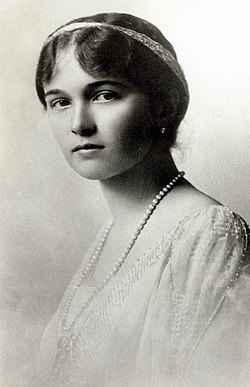
After the marriage of Alexandra and Nicholas, all of Russia awaited a male heir to the throne. 101 rounds of gunfire were fired when Olga was born in 1895, somewhat to the disappointment of the people (300 symbolized a prince, while 101 symbolized a princess). Soon, Tsar Nicholas wrote a heartfelt letter to Queen Victoria letting her know about the baby. For the next four years, everything went rather peacefully for the royal family. Soon it was time for the gala coronation ceremonies in May; everything seemed to be going well, but, as mentioned earlier, the Khodynka Tragedy occurred on the day of the ceremony, though everything continued as though nothing had happened. By the end of 1896, Alexandra was pregnant with her second child, Tatiana. Olga, now a toddler, was known to be a happy and stoic child during this time. Nicholas II had a widowed uncle with two children, Maria and Dimitri, who often played with Olga in their childhood. Maria would later write that Olga was “remarkably ugly,” which, really, showed her own ugliness inside. Still, Olga, Maria, and Dimitri remained playmates, and the family hoped that Dimitri and Olga would marry one day.
During a visit to Darmstadt in 1899, when Olga was four, she and her cousin, sister Tatiana, were taken to a local toy store. The children had been told they could freely select any toy they wanted for themselves and to give as gifts. After looking at everything for a while, Olga chose the smallest toy, then refused to buy anything else for herself. Ms. Eagar, the lady who had brought them to the toy store, took her aside and asked why she chose only that one toy. Olga responded, “But the beautiful toys belong to some other little girls, I am sure; and think how sad they would be if they came home and found we had taken them while they were out.” As a result, Olga was publicly known for being emotionally understanding and kind. Olga also showed signs of directness that would later be known as one of the main parts of her personality; once, when Alexandra wished to have a portrait painted, Olga got impatient and told the painter, “You are a very ugly man, and I don’t like you one bit!”
During the Russo-Japanese War, Olga shocked Miss Eagar by saying, “I hope the Russian soldiers will kill all the Japanese, not leave even one alive.” Miss Eagar scolded her and asked why she had said so, prompting Olga to ask, “Have they an Emperor in Japan?” and similar questions. Then, after a long while, Olga quietly replied, “I did not know that the Japs were people like ourselves. I thought they were only like monkeys.” These words show that Olga had an incomplete and inaccurate understanding of Japan and its people, despite being a grand duchess. Instead of seeing the war as a conflict between two nations of real people, she believed the Japanese were inferior or not even fully human (if she actually believed what she had said about them being monkeys). Because she lacked basic knowledge about Japanese society and culture, she made an extreme and violent statement without understanding its real human consequences; her opinion came from ignorance rather than informed awareness of the situation (which I’m afraid was the case for her parents; they did not fully understand what was happening not only in their country, but everywhere else as well, and did not think their actions would have any major consequence). Miss Eagar later said about Olga, “She never again said anything about being pleased to hear of the deaths of the Japanese.”
Because Olga was the oldest, her life was more complicated than her sisters’. Her mother expected her to be a perfect example to her siblings, and told her that multiple times. While trying to meet her mother’s standards, Olga took on new duties during her teenage years. She became commander-in-chief of the Third Elizabethradsky Hussars Regiment. One of her duties was to busy herself with the decoration of her regiment’s uniform. And so in 1911, on the petition of their commander-in-chief, the troops were given short white fur-lined cloaks to be worn with their full-dress uniforms.
One day, after reading some bloody aspects of English history, Olga had told Ms. Eager, “I really think people are much better now than they used to be. I’m very glad I live now when people are so kind,” which is ironic because she was murdered by some not-so-kind people. Just once during her life, Olga was in love with someone who would not be considered a suitable spouse for the grand duchess, Pavel Alekseyevich Voronov. Voronov worked as a lieutenant, one of the six main deck officers, at Shtandart. You may wonder where historians obtained all this information. Well, it was from Olga’s diary; she had written (in secret code) about her feelings for Voronov and that she had never felt happier in her entire life. They never married, for Voronov got engaged and married someone else. Some time before the assassination of the entire family, Olga, Tatiana, and their mother, Alexandra, enrolled in a nurses’ training course and became Red Cross nurses in WW1.
In March 1917, Alexandra told Olga, along with her other children, that Nicholas had abdicated the throne (forcefully) and that they were now all under house arrest. Weeks before the entire family’s murder, when the Romanovs were confined in Ekaterinburg, Olga became consumed by despair, grew more and more distant from her sisters and closer and closer to her mother. The family was taken down to a cellar and murdered on July 17, 1918. Sources say they probably knew that was going to be their end.
Tatiana Romanova
Tatiana Nikolaevna Romanova was the second child of Nicholas and Alexandra. She was often considered the most beautiful of her sisters and the one who most resembled her mother.
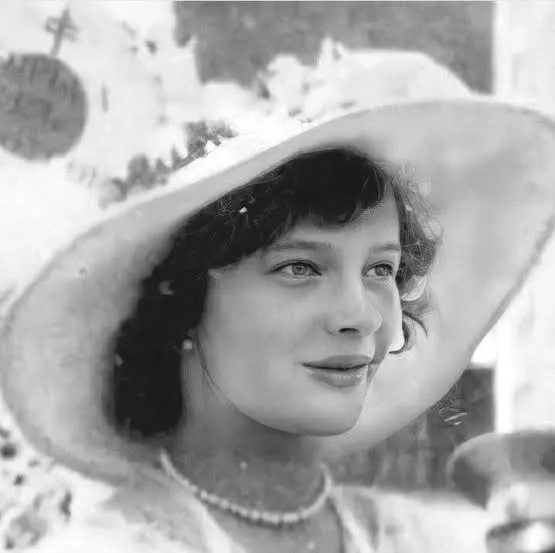
Tatiana sometimes went by the nickname “Tanechka.” She was interested in fashion and was the most sociable of her siblings. She often wished for friends her own age, but her mother disliked common people and those not of the high rank she was. Tatiana was also known to be deeply religious, for she read the Bible frequently. Like her sisters, Tatiana knew little about the world outside the palace and was naive. When she was a child, she was stunned to learn that Ms. Eager was paid to take care of her and her sisters, and that she was not doing so of her own free will. When Ms. Eager told her, “You have seen me get my money every month,” Tatiana replied with, “I always thought it was a present to you.” Tatiana was known to be closer to her mother than any of her sisters, and she adored her only brother, Alexei. As a young teenager, Tatiana was given the rank of honorary colonel. When WW1 broke out, Tatiana, along with her sister Olga and mother Alexandra, became Red Cross nurses (as mentioned in Olga’s section earlier).
Several people expressed their desire to marry Tatiana and sent a letter to her father, but Nicholas replied that he would let his daughters decide whom to marry. Neither Tatiana nor any of the other Romanov sisters married in their lifetime. The family was arrested during the Russian Revolution of 1917. Before their family was taken to the cellar and killed, Alexandra stitched jewels and gems onto the clothes of her children so they would be protected from bullets. On July 17, 1918, it is recorded that Olga and Tatiana were screaming and calling for their mother when they realized they were going to die. The soldiers had difficulty stabbing them because of the jewels sewn onto their clothes, but they both died from being shot in the head.
Maria Romanova
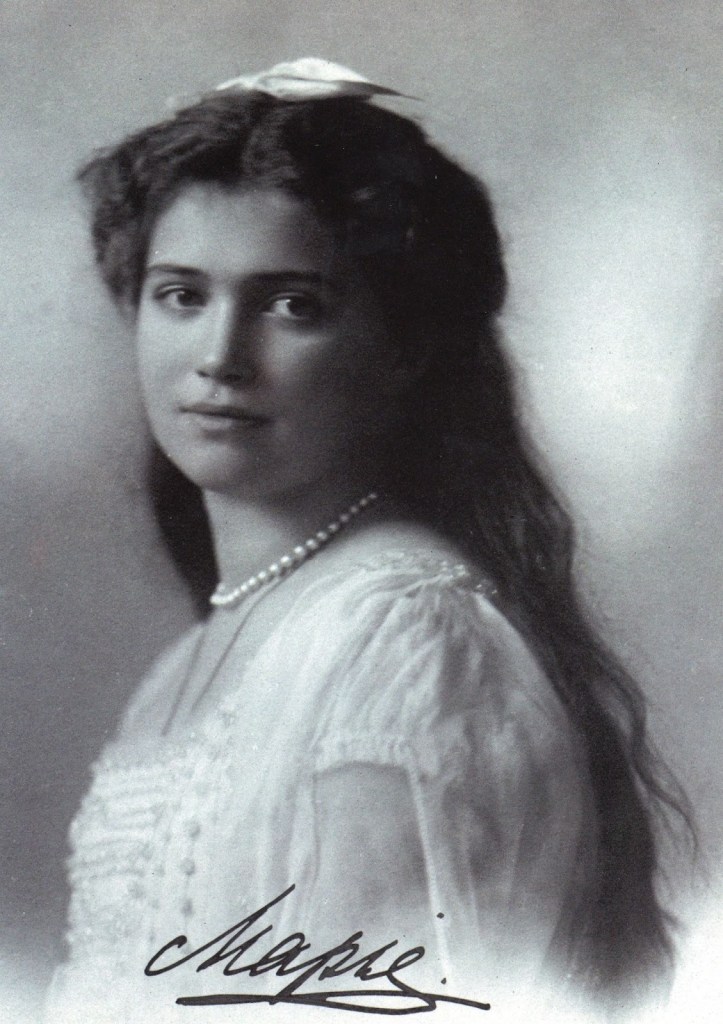
Maria Romanova was born in 1899, the third daughter of Nicholas II and Alexandra Feodorovna. The four Romanov sisters referred to themselves as “OTMA” (an acronym made from the first letters of their names). While Tatiana was considered the most beautiful by some, Maria was considered so by others. She was known for having light hair and dark, blue eyes. Maria was nicknamed “Mashka” by her family and was described as being mostly happy and good-natured. Lord Mountbatten later said that he had been determined to marry Maria; he never did, due to her death, but he did keep a photograph of her in his room until his death. The “Big Pair” (Olga and Tatiana) and the “Little Pair” (Maria and Anastasia) slept in plain beds and started their days with cold showers despite being royalty.
When Olga and Tatiana worked alongside their mother as nurses during World War I, Maria and Anastasia visited wounded soldiers to cheer them up. However, as it became increasingly clear that Russia would not be successful in World War I, rumours began that Rasputin was responsible for the tsar’s poor decisions. When Rasputin was murdered by some of the royal family members themselves (including the Romanov siblings’ cousin Dimitri) in 1916 (the other royals believed that Rasputin had hypnotized or put the Romanovs under a spell and was bringing the downfall of the country), Nicholas’ already weak power began weakening even more, leading to a full-on revolution in 1917.
In 1917, while under house arrest, the four Romanov sisters (Olga, Tatiana, Maria, and Anastasia) shaved their heads because a severe bout of measles caused their hair to fall out. When the Romanov family was in exile, a guard somehow smuggled in a cake for Maria’s 19th birthday. However, this was discovered, and they switched that guard and his partners for a much less friendly set. When the Romanovs were taken to the basement on July 17, 1918, their fate was read to them out loud from a piece of paper, causing Nicholas II to loudly say, “What!?” before being shot in the chest. Maria was shot in the thigh and was bleeding for a while. Like Olga and Tatiana, soldiers attempted to stab Maria in the chest, but failed due to the gems sewn to her dress, and shot her in the head instead. Although Anastasia was the sister most often rumored to be alive, several women claimed to be Maria as well, though they all turned out to be liars.
Anastasia Romanova
For almost a full century after her execution, rumors of Anastasia’s survival have been a popular topic of discussion. Several women claimed to be Anastasia, even years after her death. The most convincing of those women was later found out to be Anna Anderson, and was taken to a psychiatric facility because she was mentally ill. But people believed Anna Anderson for a while, and were genuinely convinced that she was the grand duchess until the late 1980s.
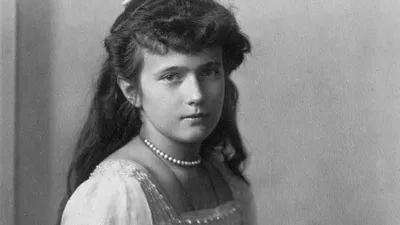
Born in 1901, Anastasia Romanova would only live until the age of 17. Her own mother, Alexandra, was her earliest teacher and taught her how to spell. Even after she was captured, energetic and unruly (as a child, she tripped workers on purpose and played pranks on her tutors), Anastasia did not always listen to the instructions of her captors, and once poked her head out of a window, and was fired at from below. Those bullets missed, and she survived. It was recorded that Anastasia died last because the guard who tried to kill her was drunk (you would think they would be alert, considering a royal family member surviving and having children could end their rule); however, she was shot in the head by another. After every family member died, they were burned by fire or acid to avoid identification and buried with no sign.The most famous impersonator of Anastasia was Anna Anderson. In 1920, she attempted suicide but survived and was brought into an asylum. For six months, she did not speak at all, but when she did, it was found out that she had a Russian accent. Because of both this and the scars on her body, nurses developed different theories as to who she might be (personally, if I were a nurse at that time, I would just do my job rather than talk all day). Another patient, Clara Peuthert, was the first to assume that the woman could be the grand duchess (the topic was in the newspapers at the time), but she believed that Anna Anderson was Tatiana. Individuals who were friends/servants of the Romanovs came and confirmed that the woman was Tatiana by just looking at her. The whole situation seems ridiculous, because in my opinion, Anna Anderson and Tatiana look very different. Take a look at Anna Anderson and Tatiana below:
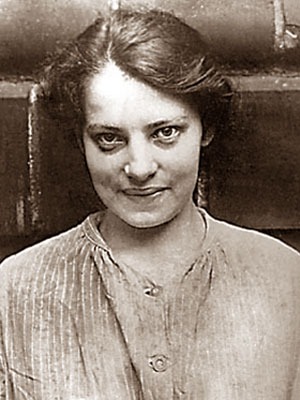
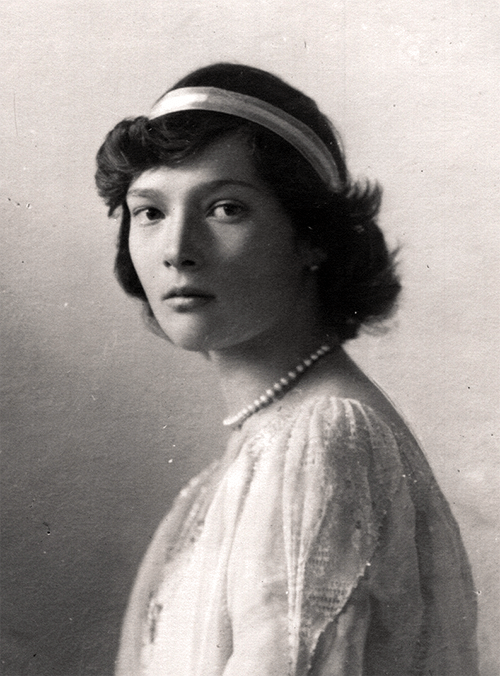
I am not sure how those servants lived for years with the Romanovs and could not tell the difference between Tatiana and a random woman. I do think, however, that if Anastasia had aged, grown tired and depressed, she would have looked like Anna Anderson. Despite all this, Anderson refused to speak. One of the grand duchess’s former ladies in waiting said that Anderson was too short to be Tatiana, to which she replied, “I never said I was Tatiana.” Although many women claimed to be Anastasia in different parts of the world and at different times, none had a case as convincing as Anna Anderson’s. Many people who had been friends with the Romanovs provided Anderson with housing, but they said that Anderson was not any of the grand duchesses. Anderson was brought into court in 1927, and for 32 years, the remaining Romanovs fought with her to protect their family’s fortune. Eventually, a judge in 1970 said that there was insufficient evidence to conclude that Anderson is Anastasia. Anna Anderson was instead identified as a Polish factory worker, Franziska Schanzkowska, who had gone missing just before Anderson attempted suicide. Schanzkowska had had an injury during a factory fire, which would explain the scars and bruising on her body. Anna Anderson would later die in 1984, married to someone who called her Anastasia.
In 1997, Fox Animation Studios produced the animated film “Anastasia.” During this time, people were unsure of whether or not Anastasia had survived, because their burial site was discovered in 1979 with two bodies missing, Alexei’s, and the body of one of the sisters. The animated film is a much more child-friendly story, but it is based on the true story of Anastasia. In 2007, the DNA testing done on the bones showed that the two bodies were of Alexei and Maria, and Anastasia’s body was identified among the other bodies from the previous burial.
Alexei Romanov
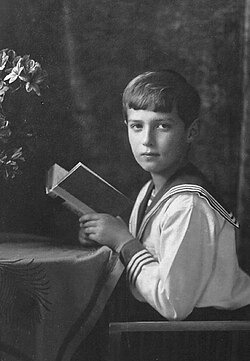
The last child of Alexandra and Nicholas II, as well as the last Russian prince, Alexei Romanov, was born on August 12, 1904. He was born with hemophilia, a disease that primarily affects males (maybe that is why his sisters were not affected by the illness); he had acquired the disease from his mother, who had acquired it from the line of her grandmother, Queen Victoria. Hemophilia was known as the “royal disease,” because so many people from the intermarried Royal families either had it or carried it. Alexei’s birth was considered very special because he was the first son and heir of Nicholas II. His family first called him “baby,” and later, “Alyosha.” Every member of the Romanov family (who died in the February Revolution) was declared a saint by the official Russian Orthodox Church in 2000. Alexei lived with his dad at the army headquarters during WW1, and became one of the first Boy Scouts in Russia. Alexei was promoted to lance corporal (a military rank) in 1916; he was very proud of the promotion. After the imprisonment of the Romanov family in 1917, Alexei constantly wrote in his diary that he was extremely bored and begged God to have mercy on him. During his imprisonment, records state that he used to injure himself on purpose and get hemorrhages (ruptured blood vessels). The prince was murdered along with the rest of his family on July 17, 1918 (when he was 13).
Conclusion
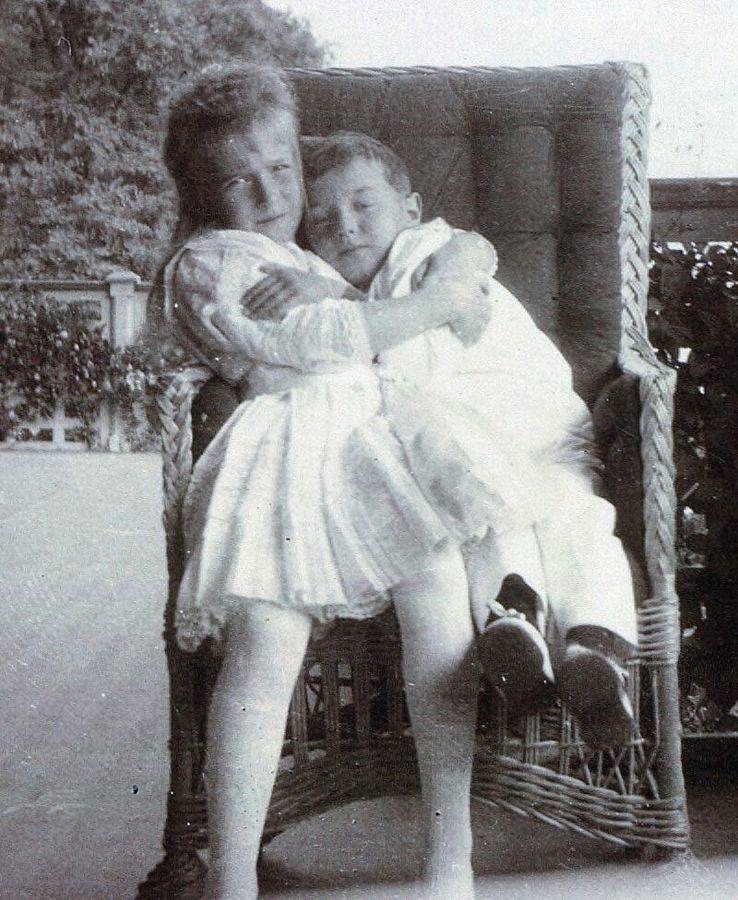
I wrote about all the Romanov family members so you, readers, could better understand their personal lives, sympathize with them, and finally decide whether they deserved their fate. The reasoning behind the title of this essay, “When A Crown Becomes A Liability,” is because the Romanovs were simply naive people who could have lived perfectly fine as common folk, however when you are royalty, you cannot afford being naive, or making multiple mistakes, as these mistakes affect your entire kingdom, perhaps even more than they affect you; therefore Nicholas II’s crown was his liability. In my opinion, because Nicholas II and Alexandra Feodorovna were directly responsible for the deaths and struggles of so many people, they had it coming and probably deserved what happened to them. I am sure that is what they thought in their last moments. Their children, on the other hand, did not bear any of the responsibility (at least I do not think they did) and should not have been killed. The reason they were murdered was so the bloodline does not continue, and so no one threatens their reign, but how just or fair is that towards the Romanov siblings? Unfortunately, history is littered with innumerable cases of bloodshed and even more brutal situations, some of which make this story look vague and not that depressing. Ultimately, while the emperor and empress most likely deserved their fate, their children definitely did not, especially Alexei, considering his young age and illness. What do you think?
Bibliography
“Alexandra Feodorovna.” Biography. June 29, 2021. https://www.biography.com/political-figures/alexandra-feodorovna.
“Alexei Nikolaevich, Tsarevich of Russia.” Wikipedia. January 25, 2026. https://en.wikipedia.org/wiki/Alexei_Nikolaevich,_Tsarevich_of_Russia#.
Deron, Bernadette and Kuroski, John. “Anastasia Romanov: How The Daughter Of Russia’s Last Czar Became One Of History’s Most Elusive Women.” All That’s Interesting. September 27, 2021. https://allthatsinteresting.com/anastasia-romanov.
Dimuro, Gina and Kuroski, John. “The Tragic Story Of Maria Romanov, The Beautiful Daughter Of Russia’s Last Tsar.” All That’s Interesting. October 12, 2021. https://allthatsinteresting.com/maria-romanov.
“Grand Duchess Tatiana Nikolaevna of Russia.” Wikipedia. January 22, 2026. https://en.wikipedia.org/wiki/Grand_Duchess_Tatiana_Nikolaevna_of_Russia#.
Keleher, Edward. “Bloody Sunday.” EBSCO. 2023. https://www.ebsco.com/research-starters/history/bloody-sunday.
“Khodynka Tragedy.” Wikipedia. June 22, 2025. https://en.wikipedia.org/wiki/Khodynka_Tragedy.
Llewellyn, Jennifer, McConnell, Michael, and Thompson, Steve. “Russia in World War I.” Runway Air Force. April 30, 2022. https://runway.airforce.gov.au/russia-world-war-i.
“October Manifesto.” Encyclopedia Britannica. October 23, 2025. https://www.britannica.com/event/October-Manifesto.
“Romanov Family.” History. May 28, 2025. https://www.history.com/articles/romanov-family.
“Russo-Japanese War.” Britannica. January 19, 2026. https://www.britannica.com/event/Russo-Japanese-War.
“Tsar Nicholas II: Determining Factor In The Decline Of The Romanov Dynasty.” IPL. Date accessed: January 21, 2026. https://www.ipl.org/essay/Tsar-Nicholas-II-Determining-Factor-In-The-4E866DB140862459.
Whitcomb, Janet. “Grand Duchess Olga Nicholaievna.” Alexander Palace. Date accessed: February 5, 2026. https://www.alexanderpalace.org/palace/olganbio.php.
 Self Led Studies
Leave a comment