Their place in society and which is more important.
Introduction
Have you ever stopped to think what our planet will look like in fifty years if we continue to prioritize industrial expansion over ecological preservation? Modern nations have prioritized economic growth above all else in recent years. So much so that, even the well-being of the earth we live in and depend on (its air, water, and food) is being put in the backstory. Since the early 20th century, governments have made economic growth their primary goal, seeking to improve living standards, reduce poverty, expand access to essential public services, and more. Governments do not pursue economic growth solely for selfish reasons; they also seek to improve and develop their countries as a whole. Why they do it is understandable, even if it might be wrong.
If someone asked a random person to choose between material wealth and physical health, they would probably choose material wealth, because physical well-being is something they already think they have and consider unimportant. Governments should take the environment more seriously, as it is what sustains them on this earth. Ruining it with the burning of fossil fuels, constant vehicle driving (excluding gas), deforestation, constant mining, and more shows the lack of care people have for something so valuable that has sustained life for millions of years.
People might ask, “Does it have to be one or the other? Can governments balance both aspects and consider both the economy and the environment?” Yes. It can be balanced. But one will always be over the other, and we have to think deeply and choose which one. Countless people in the world are currently suffering from pneumonia, heart diseases, and lung cancer that result from air pollution and poor air quality. In this essay, I’ll argue that the environment and the health of the population should be the number 1 priority, as healthy bodies are less depressed and lazy and capable of doing much more efficient and elaborate work for their employers, which would benefit the economy. This essay will discuss facts about governments prioritizing economic growth over the environment (and why they do so), whether they should, and a call to action (for people and governments).
Economic Growth
Humans require specific goods and services to live healthy and happy lives, such as the building materials for their homes, the devices they use for learning and entertainment, the books they use for education, and much more (Roser 2021). Manufacturing companies produce almost everything humans use, which is a crucial part of economic growth. I do not want readers to think that economic growth is unimportant, because it is a major part of modern-day life.
Creating books in the past was extremely time-consuming (people wrote the words by hand and had to make sure everything looked neat and was in the same handwriting), so only the very wealthy owned books. When Gutenberg invented the printing press in the 15th century (which represented economic growth at the time), more and more people were able to afford books and learn to read and write (Roser 2021). This shows the usefulness of economic growth and new inventions.

However, Gutenberg’s printing press did not damage the environment nearly as much as dirty energy sources, such as coal and oil; coal and oil release greenhouse gases, accounting for approximately 68% of greenhouse gas emissions in the world (and 90% of all carbon dioxide emissions), contribute to air and water pollution, and directly drive climate change (United Nations).
For readers to fully understand why people take economic growth so seriously and value it so highly, it is important to understand what it is and how it has altered the world over the years. A country’s economy is the sum of all its activities and the goods it produces (this is called gross domestic product, or GDP). Economic growth has profoundly reshaped the world, as it has been the prime force behind improving education, numerous innovations, and an increased overall life span. When people discuss a country’s economic growth, they mean the increase in the quantity and quality of goods that producers create in that country, which leads to higher GDP. In other words, when a country has a high GDP, there are more resources to make the lives of people living in it better. Between 1820 and 2018, the number of people living in extreme poverty and hunger dropped from 75% to around 8.5% (ProbablyGood 2025). This was due to increased economic growth, which led to higher incomes and more job opportunities. Because of these radical positive results, most governments and institutions have made economic growth their top priority. A country’s economic growth brings many benefits, and its leaders, seeking ways to improve, strive to increase it as much as possible, as that will boost the country’s resources and give residents more opportunities to achieve a fulfilling life.
Negative Effects of Economic Growth
Despite all the benefits of economic growth listed and described above, modern economic expansion has relied heavily on fossil fuels, making greenhouse gas emissions unavoidable, which is a severe consequence of growth. Modern governments have tied economic growth directly to fossil fuel consumption. As energy investment analyst Siddharth Singh explains, “Since the dawn of the industrial age, fossil fuels have been a key enabler of economic development,” and “…economic growth has been closely tied to a rise in greenhouse gas emissions through most of modern economic history.” (Singh 2024) This demonstrates that economic growth has heavily depended on fossil fuel consumption, which, as I mentioned earlier, directly pollutes the environment and reduces air and water quality. However, Singh also states that this situation is slowly changing, as less energy is required for growth than before, and governments are now focusing more on cleaner energy sources. Unfortunately, governments tend to put the environment on the back burner when they wish to increase their economic growth, as the economy seems to them something that should be improved immediately, while the environment is not urgent and can be fixed at any time.
Economic growth depends on energy, and most societies have produced that energy by burning fossil fuels that release CO2 into the atmosphere. As a result, researchers have directly linked economic growth to the highest levels of climate change (which lead to extreme weather, natural disasters, melting Arctic ice, and the threat of species extinction due to habitat destruction). Environmental protection itself drives economic growth, as prioritizing the environment enables the development of green technologies and clean, renewable energy, creating jobs and supporting a more sustainable economy. Additionally, governments should reconsider giving such high priority to economic growth, as experts estimated that over 700 million people lived in extreme poverty in 2020 (Thomas 2023). Poverty levels declined further between 2020 and 2022 due to COVID-19, the Russia/Ukraine war, and extreme climate change driven by CO2 emissions (Thomas 2023). Also, keep in mind that economic growth not only contributes to higher production (GDP) but also, in turn, to higher consumption (individuals use more resources as more are available), which also harms the environment by increasing carbon footprints from manufacturing goods and the waste they generate.
Do you notice a pattern in the consequences of economic growth? The only consequence is that it degrades and harms the environment; this tends to occur before other impacts (such as humans becoming ill if they consume polluted water or breathe polluted air). Raising living standards now should not be considered more urgent than saving and preserving the earth and its qualities for generations yet to come, since future generations will have to deal with these effects.
The Environment
I described the pros and cons of economic growth, so now let’s get to the environment. The environment is everything around us, and it is what enables life to exist. The environment and its components are crucial to the survival of human life and all other species, as they provide the resources we need, such as oxygen, water, and soil (for plants to grow in). Unfortunately, individuals tend to take these resources for granted and do not appreciate them as much as they should. Countless items people use in their daily lives are manufactured from resources they extract from the environment. The device you are reading this essay on, and all other electronic devices, contain various metals taken from the earth, such as copper, gold, aluminum, iron, ferrite, and neodymium. If you have a metal water bottle, it is probably made out of steel or aluminum. The sheets of A4 paper you use to write and the notebooks you use to take notes are made from trees. People use these resources continuously, and sometimes faster than they can reproduce them (e.g., people might cut trees now to make paper, but replanting them and ensuring they grow is more complex than preparing and completing a dreaded final exam). The environment has contributed not only to advanced technology and modern resources used daily. It has also contributed to human happiness. Extensive, detailed research indicates that green spaces drastically improve mental health, increase happiness, and reduce stress (Barton and Rogerson 2017). As for cons? There are no cons to a healthy environment. Some species and plants may be poisonous, but this is considered a form of diversity rather than a nuisance. Protecting the environment is essential to maintaining the planet’s natural, social, and economic health.
Society’s View on the Environment and on Economic Growth
Society’s view of economic growth and the environment has changed over the years, with changing circumstances. In the past, when poverty was extremely widespread, people were much more concerned about economic growth. People viewed industrial/economic growth as profit, progress, and prosperity, since they had not yet noticed the negative environmental impacts. Today, however, rising pollution, deforestation, and climate change have destroyed habitats and ecosystems, making environmental protection an urgent global concern. Currently, more than half of the world’s population (approximately 58%) considers environmental well-being a serious crisis that governments must address immediately (ScienceDirect 2026). Many people, however, now believe that there should be a middle ground between these two, known as sustainable development. This approach facilitates progress while minimizing or avoiding environmental damage. If people use clean energy sources such as solar panels, wind turbines, and hydroelectric power plants, they can take the first step to minimizing environmental damage from economic growth and significantly decrease their reliance on fossil fuels. Pollution negatively affects and wrecks the environment—oceans around the world absorb 30% of all CO2 emissions and 90% of the excess heat generated by these emissions, making the ocean more acidic and harming marine animals, especially big fish (United Nations). 7 million people die each year from pollution, and many more would if it weren’t for the carbon sinks (such as the ocean) that absorb it (IQAir).
You, dear reader, have just read all of this; it might be new information for you. Many people already know all of this, and they still harm the environment without guilt. Biodiversity is the incredible variety of animals and plants worldwide… and currently faces grave danger. At the moment, over 1 million species are at risk of extinction, going extinct at a rate 100 to 1,000 times faster than normal (Green Initiative 2025). Wetlands purify the water we drink every day, and they are being built on. Forests/greenery regulate the climate and clean the air, yet they are being cut down and destroyed daily. “Protecting the environment is protecting ourselves,” says Green Initiative, and they couldn’t be more right.
What is the Solution?
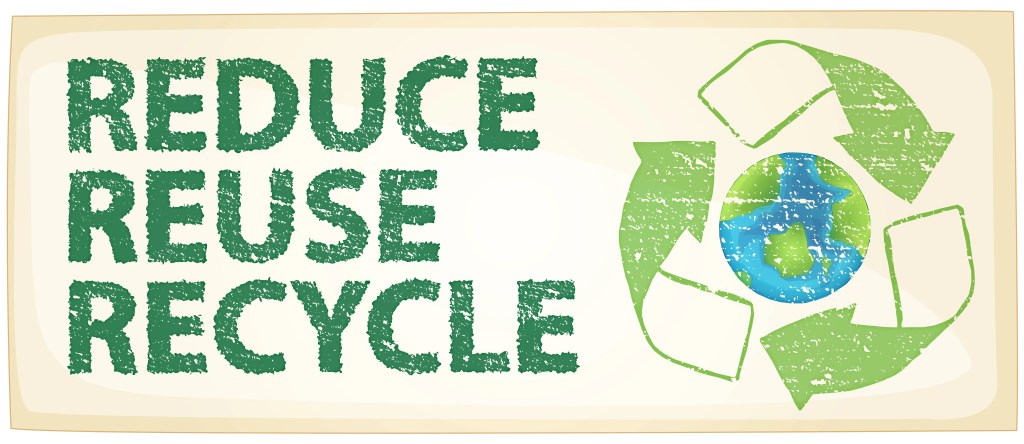
But how do we stop this? What can we do to avoid further destruction of the planet and work on improving it for future generations? Individuals like you and me can focus on more basic and doable tasks. For example, have you heard of the three R’s? We can implement it into our daily lives. The three R’s are: reduce, reuse, and recycle. Reduce means lessening the amount of waste you generate, therefore reducing your ecological footprint. This means buying more whole foods in bulk and fewer processed foods (whole, organic foods typically come in cardboard, while processed foods, such as a pack of Oreos, produce much more waste—imagine how many people buy a pack of Oreos worldwide daily). Reducing is simply making sure you use less plastic (i.e., plastic bags, plastic bottles, other single-use plastic), as you are “reducing” the amount of trash you generate (note: natural garbage, such as cardboard, paper, and food waste, can be composted to create more fertile and healthy soil, so they do not count). Reusing means giving items a second life. If you are using a plastic water bottle, use it every day and do not throw it away. Reusing also refers to repairing broken items rather than replacing them, donating old clothes instead of throwing them away, etc. Recycling is the act of processing items that would otherwise go into a trash can to create a new product. Some food packaging worldwide is made from recycled materials. In addition, bike/walk instead of driving whenever possible, conserve energy (i.e., close the lights in your home when you don’t really need them, don’t use excessive water in the shower, etc.), plant trees, participate in clean-ups, and raise awareness about the environment. These are some options individuals can do to help themselves and the world.
But what about governments? Governments can ultimately help the environment much more than we can, and they can do this instantaneously. They can chip in by providing clean transportation systems (e.g., electric cars and buses, and charging stations), investing in more green spaces, and imposing taxes on environmentally harmful activities, such as throwing garbage on the street rather than in a trash can.
Conclusion
To conclude, the environment is an immensely valuable asset that is easy to destroy but difficult to restore. A 300-year-old tree can be chopped in a few minutes, but it will take 300 years to grow back. Currently, 99% of the world’s population breathes toxic air, and some oceans and bodies of water contain more plastic than fish. Earth is facing biodiversity loss, pollution, and climate change, all of which demand immediate action, as they have already caused irreversible damage and will worsen if we do not act now.
Bibliography
“Air pollution kills 7 million every year.” IQAir, December 15, 2025. https://www.iqair.com/newsroom/air-pollution-kills-7-million-every-year.
Barton, Jo and Rogerson, Mike. “The importance of greenspace for mental health.” PubMed Central. November 1, 2017. https://pmc.ncbi.nlm.nih.gov/articles/PMC5663018/.
“Causes and Effects of Climate Change.” United Nations. Accessed March 4, 2026. https://www.un.org/en/climatechange/science/causes-effects-climate-change.
“Economic Growth: An Impact-Focused Overview.” Probably Good. March 8, 2025. https://probablygood.org/cause-areas/economic-growth/.
Kilgus, Jukka and Shrum, Trisha R. “Global public opinion on tradeoffs between environmental protection and economic growth.” ScienceDirect. 2026. https://www.sciencedirect.com/science/article/pii/S0921800926000406.
Roser, Max. “What is economic growth? And why is it so important?” Our World In Data. May 13, 2021. https://ourworldindata.org/what-is-economic-growth.
Singh, Siddharth. “The relationship between growth in GDP and CO2 has loosened; it needs to be cut completely.” IEA. January 21, 2024. https://www.iea.org/commentaries/the-relationship-between-growth-in-gdp-and-co2-has-loosened-it-needs-to-be-cut-completely.
“The ocean – the world’s greatest ally against climate change.” United Nations. Accessed March 10, 2026. https://www.un.org/en/climatechange/science/climate-issues/ocean.
Thomas, Vinod. “The truth about climate action versus economic growth.” Brookings. May 3, 2023. https://www.brookings.edu/articles/the-truth-about-climate-action-versus-economic-growth/.
“Why Should We Protect the Environment? The Urgency to Act Now.” Green Initiative. June 2, 2025. https://greeninitiative.eco/2025/06/02/why-should-we-protect-the-environment-the-urgency-to-act-now/.
 Self Led Studies
Leave a comment